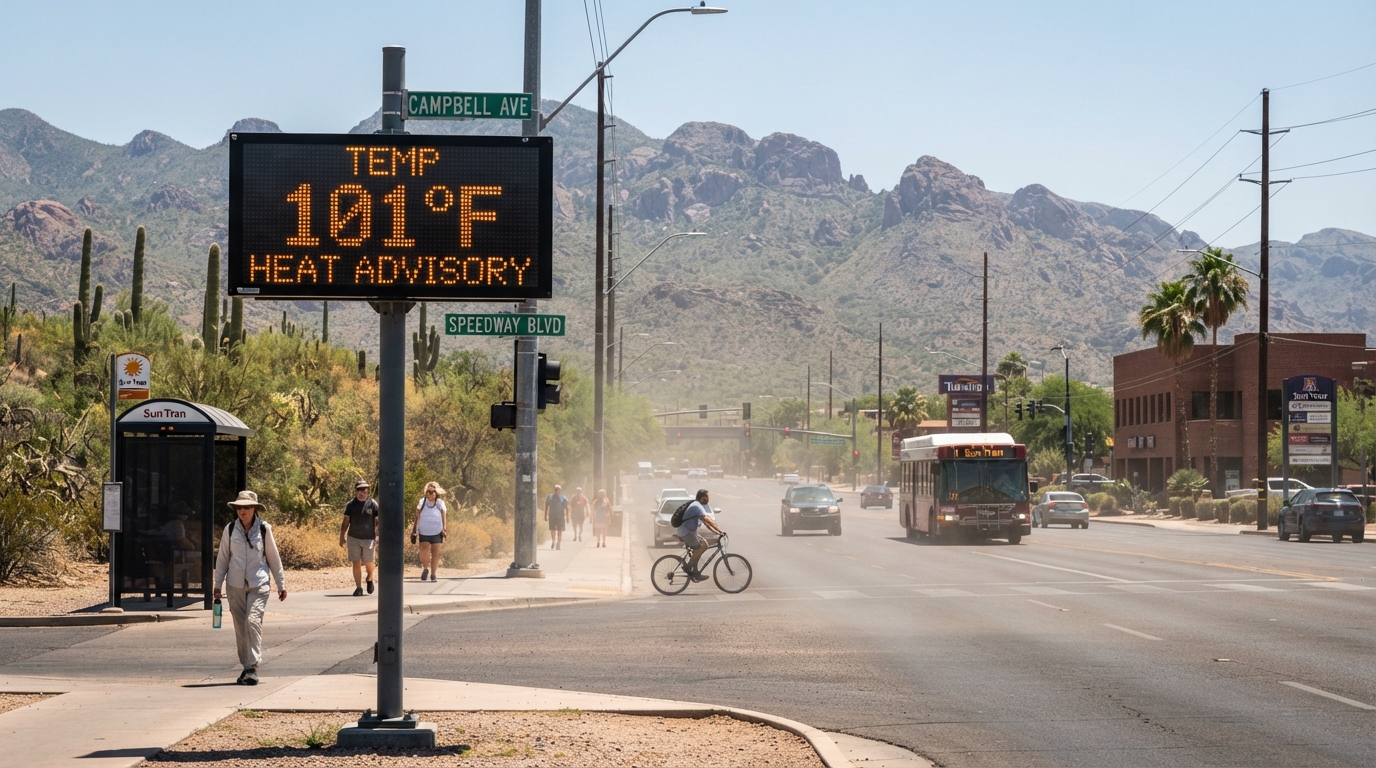
The March milestone was more than a weather curiosity: it lengthened the period during which heat threatens health, infrastructure and household budgets.
Archive note: This report was prepared for Tucson Ahead’s 2026 launch archive using contemporaneous public records and reporting. The date reflects the underlying news event.
What happened
Tucson recorded its earliest 100-degree day on record, reaching the threshold in March. An isolated record does not describe an entire season, but an earlier start to extreme heat increases exposure before many residents, employers and public agencies have shifted into summer operations.

Why it matters in Tucson
Heat is Tucson’s most persistent weather hazard. People working outside, older adults, residents without reliable cooling and households facing utility shutoff risk are particularly vulnerable. Early heat also strains pavement, vehicles, power demand and water use.
What to watch next
The season should be evaluated through overnight low temperatures, emergency calls, heat-related illness and deaths—not only daytime records. Public agencies need to activate cooling, outreach and worker-protection measures based on conditions rather than the calendar.
Source and verification: View the underlying report or public record. Tucson Ahead independently rewrote and contextualized this article; no source article text or publisher-owned photography was republished.