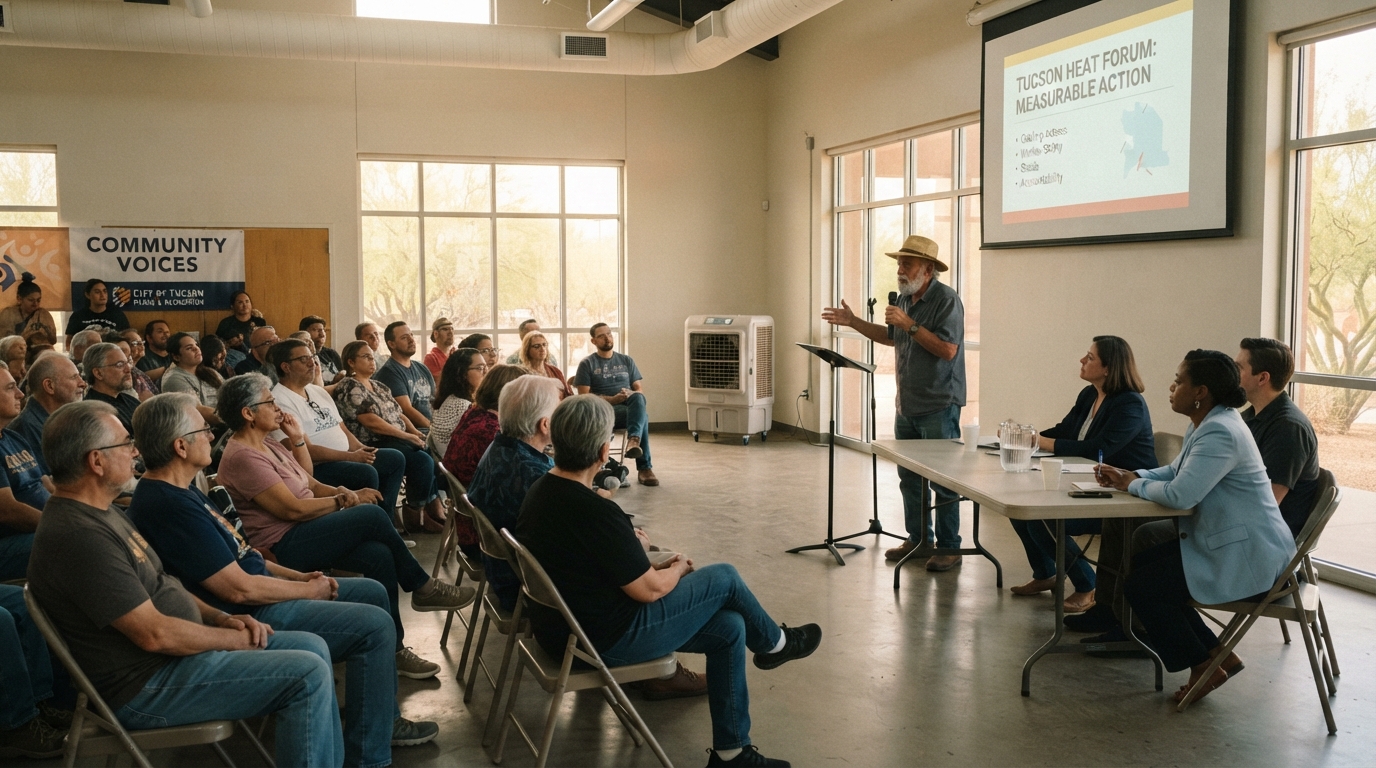
Community testimony shifted the heat discussion from awareness toward cooling access, worker safety, shade and public accountability.
Archive note: This report was prepared for Tucson Ahead’s 2026 launch archive using contemporaneous public records and reporting. The date reflects the underlying news event.
What happened
Tucson residents used a public forum to demand a stronger response to extreme heat. Concerns included access to cooling, protection for people outdoors, neighborhood shade and the need for government plans that produce visible results. The meeting came as record heat arrived unusually early.
Why it matters in Tucson
Heat policy crosses departmental lines: housing determines indoor safety, transportation determines exposure at stops and on sidewalks, parks influence shade, and emergency services respond when prevention fails. Without named responsibilities and measurable targets, broad resilience plans can leave gaps between agencies.
What to watch next
The city should publish heat-response triggers, cooling-center hours, shade investments and outcome data by neighborhood. Public updates should identify what changed because of resident testimony and what remains unfunded.
Source and verification: View the underlying report or public record. Tucson Ahead independently rewrote and contextualized this article; no source article text or publisher-owned photography was republished.