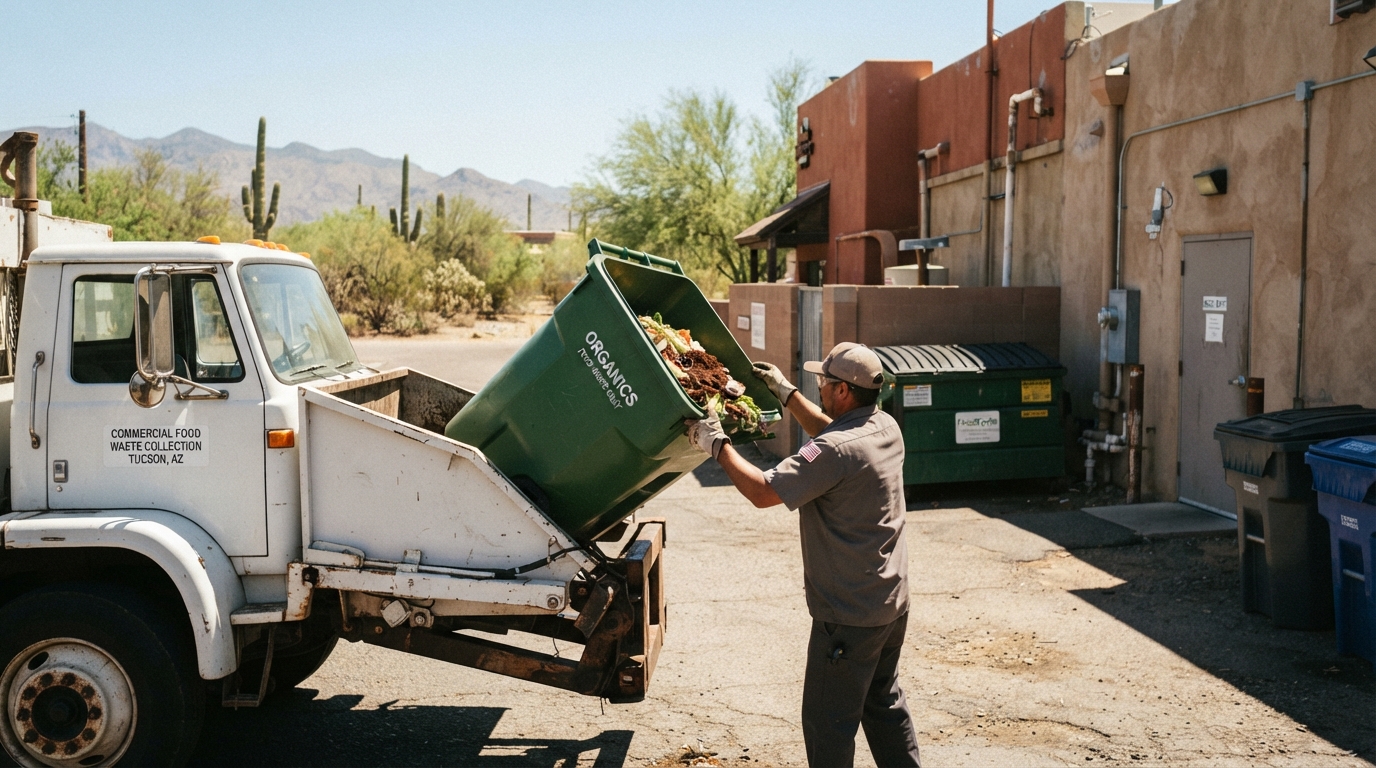
Commercial participation expands composting beyond household drop-offs and keeps organic material out of the landfill.
Archive note: This report was prepared for Tucson Ahead’s 2026 launch archive using contemporaneous public records and reporting. The date reflects the underlying news event.
What happened
Tucson highlighted growth in its commercial FoodCycle and composting work, including participation by recognizable local institutions and businesses. Food scraps create methane when buried in low-oxygen landfill conditions; separating them can instead produce compost for soil improvement.

Why it matters in Tucson
Commercial kitchens generate waste in volumes that can materially improve diversion rates, but collection logistics and contamination determine whether programs work economically. Tucson’s dry climate also makes finished compost valuable for soil water retention when it is applied appropriately.
What to watch next
The city should report tons diverted, contamination rates, program costs and where finished compost is used. Expansion should prioritize large generators while keeping requirements practical for smaller independent businesses.
Source and verification: View the underlying report or public record. Tucson Ahead independently rewrote and contextualized this article; no source article text or publisher-owned photography was republished.