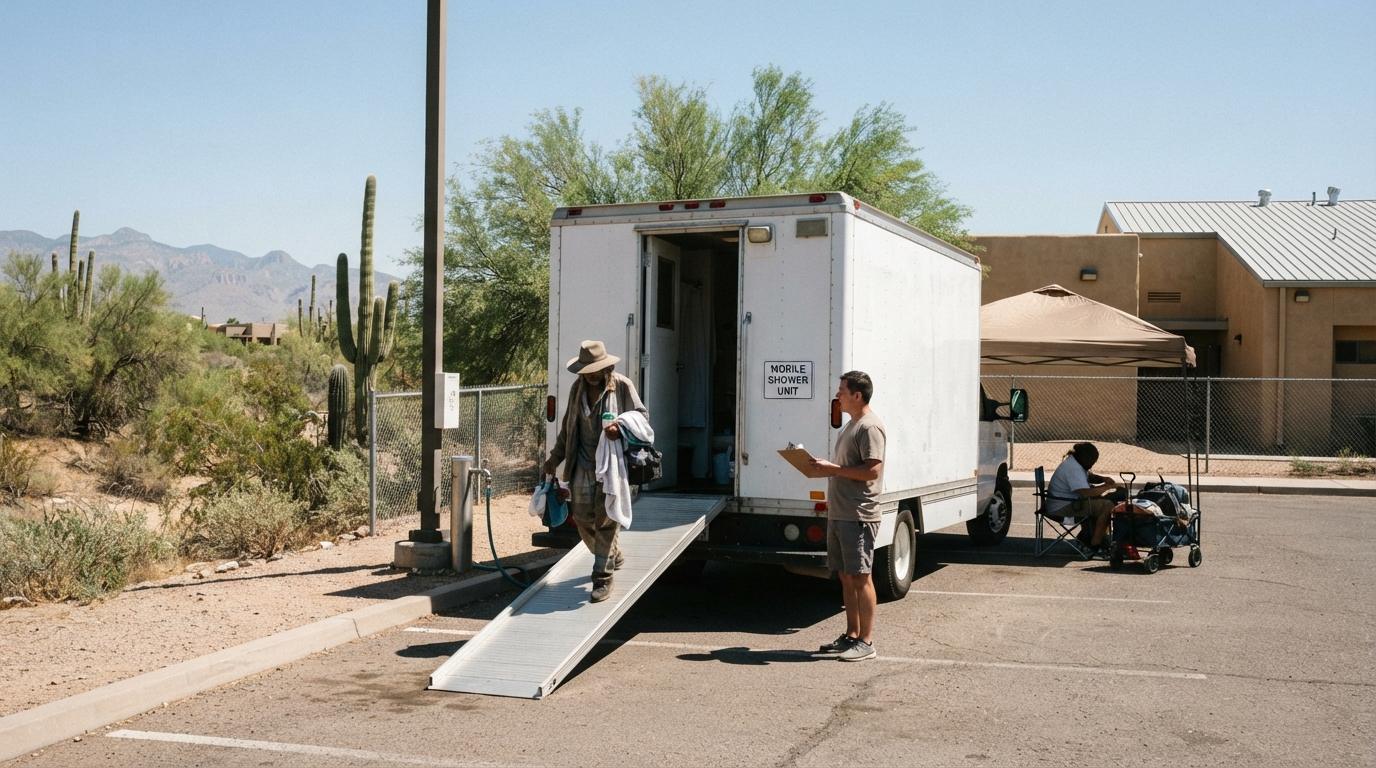
Mobile hygiene can restore dignity and remove barriers to work and services, provided the program has dependable locations and operating support.
Archive note: This report was prepared for Tucson Ahead’s 2026 launch archive using contemporaneous public records and reporting. The date reflects the underlying news event.
What happened
Tucson sought a nonprofit partner to operate a mobile shower unit for people living without shelter. A mobile model can rotate among service locations and encampment-adjacent areas instead of requiring residents to travel across the city for basic hygiene.

Why it matters in Tucson
Showers do not substitute for housing, but hygiene affects health, employment, school participation and the ability to enter many public spaces. Operational details—water, wastewater, staffing, security, laundry and consistent scheduling—determine whether the unit becomes reliable infrastructure or an occasional event.
What to watch next
The selected operator should publish a predictable schedule and report usage, downtime and referrals to housing or health services. The city should fund maintenance so equipment failure does not quietly suspend the program.
Source and verification: View the underlying report or public record. Tucson Ahead independently rewrote and contextualized this article; no source article text or publisher-owned photography was republished.