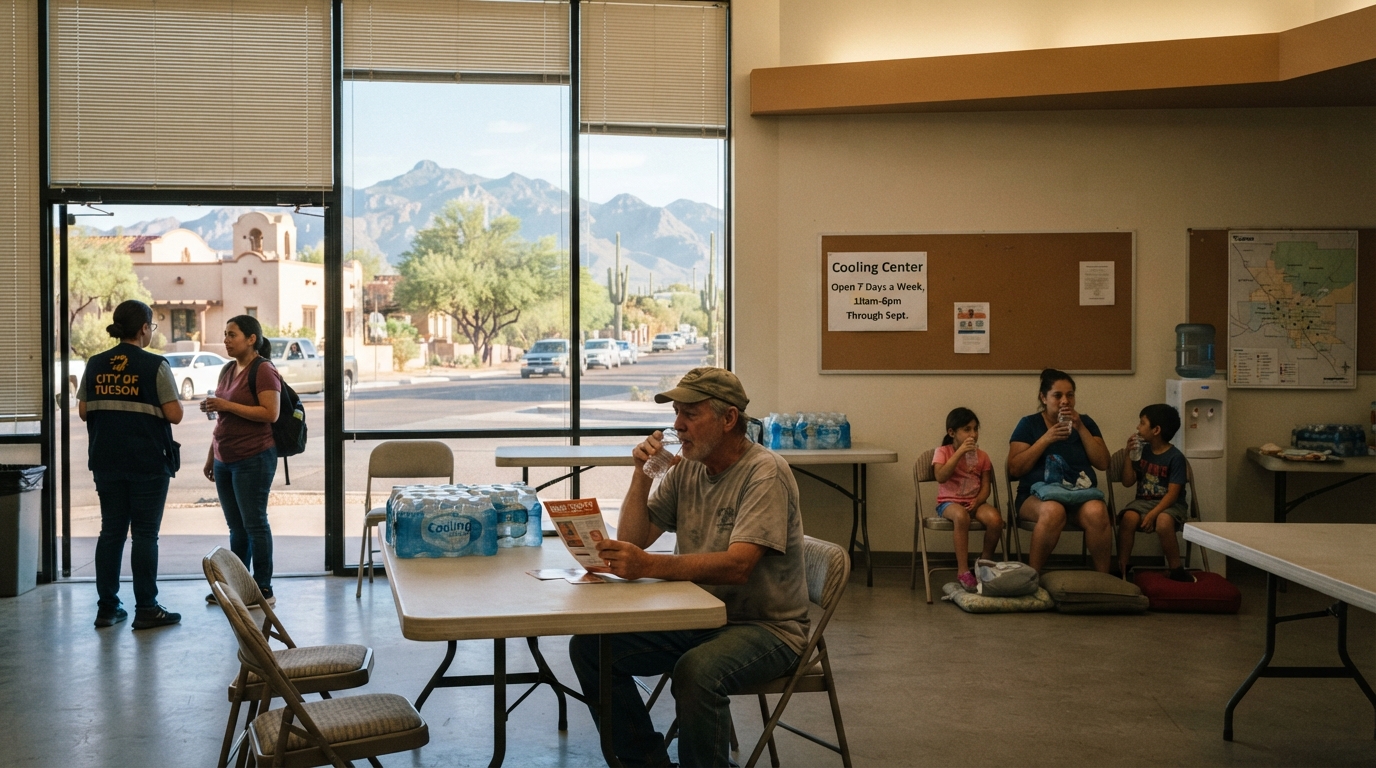
Longer operations reduce dangerous weekend gaps, but hours, transportation and public awareness still determine who can reach safety.
Archive note: This report was prepared for Tucson Ahead’s 2026 launch archive using contemporaneous public records and reporting. The date reflects the underlying news event.
What happened
Tucson expanded cooling-center operations to seven days a week through September in response to extreme heat. Consistent weekend availability addresses a recurring weakness in heat response, when many public buildings and service providers operate reduced schedules despite temperatures remaining dangerous.
Why it matters in Tucson
A cooling center helps only when residents know it exists, can travel there, are permitted to bring essential belongings and can remain during the hottest hours. People with pets, mobility limitations or jobs outdoors may still face barriers. Overnight heat also falls outside most daytime-center models.
What to watch next
The city should publish real-time locations and hours, track attendance and explain transportation and pet policies. Heat-related emergency data can help determine whether centers are placed where need is greatest.
Source and verification: View the underlying report or public record. Tucson Ahead independently rewrote and contextualized this article; no source article text or publisher-owned photography was republished.