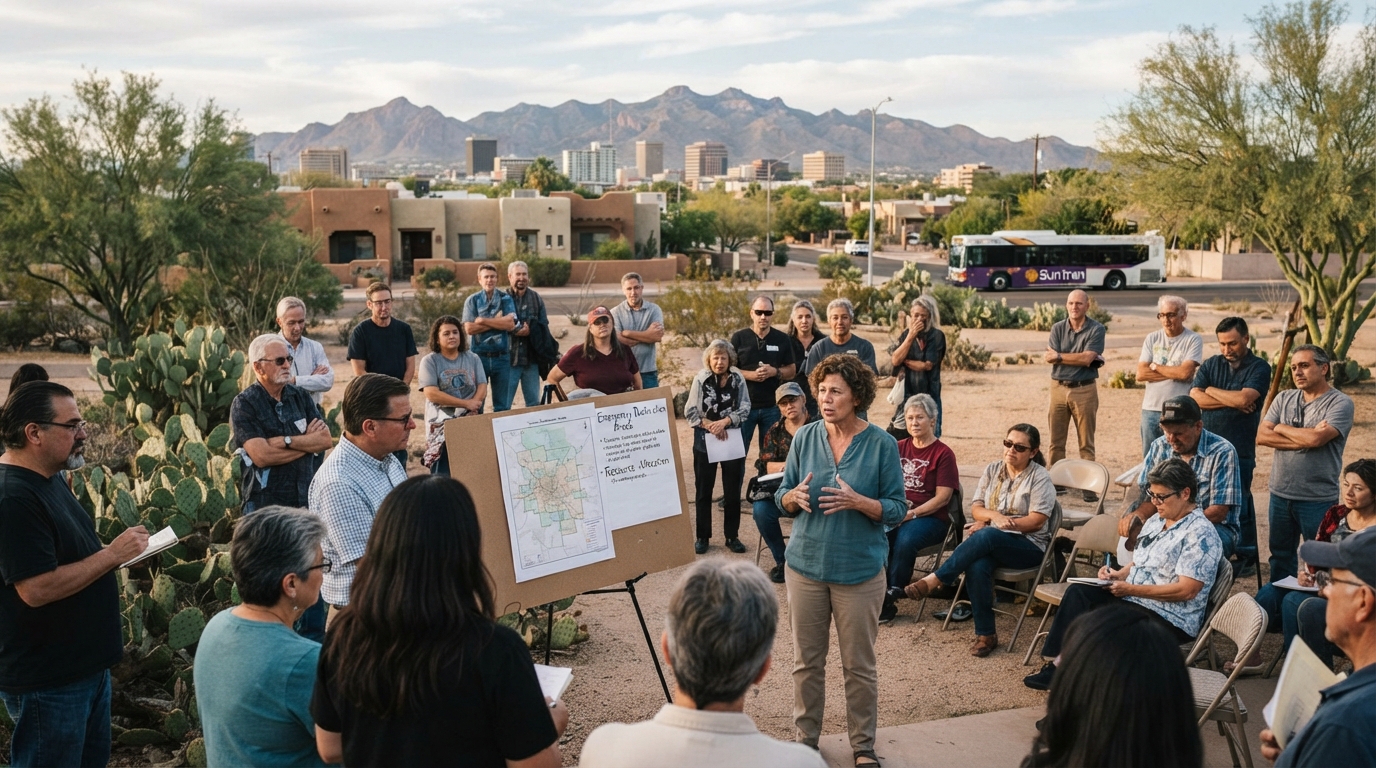
The declaration recognizes a deepening crisis, but its value will depend on whether it shortens approvals, aligns funding and produces measurable housing placements.
Archive note: This report was prepared for Tucson Ahead’s 2026 launch archive using contemporaneous public records and reporting. The date reflects the underlying news event.
What happened
The Tucson City Council declared a housing and homelessness emergency after discussing rising housing instability, visible unsheltered homelessness and pressure on the city’s response system. Emergency declarations can give staff clearer authority to prioritize work and can help organize funding, procurement and intergovernmental requests. The declaration itself, however, does not create apartments or guarantee a new revenue stream.
Why it matters in Tucson
For residents, the central question is whether the action changes the pace of housing production and crisis response. Tucson faces overlapping problems: rents that rose faster than many household incomes, too few deeply affordable units, limited shelter capacity and behavioral-health needs that municipal government cannot solve alone. The declaration creates a public accountability point against which future decisions can be measured.
What to watch next
Council agendas and budget documents should reveal the practical follow-through: money committed, units preserved or built, shelter capacity added, people moved into permanent housing and average time from project approval to opening. Tucson Ahead will distinguish those outcomes from announcements and temporary placements.
Source and verification: View the underlying report or public record. Tucson Ahead independently rewrote and contextualized this article; no source article text or publisher-owned photography was republished.