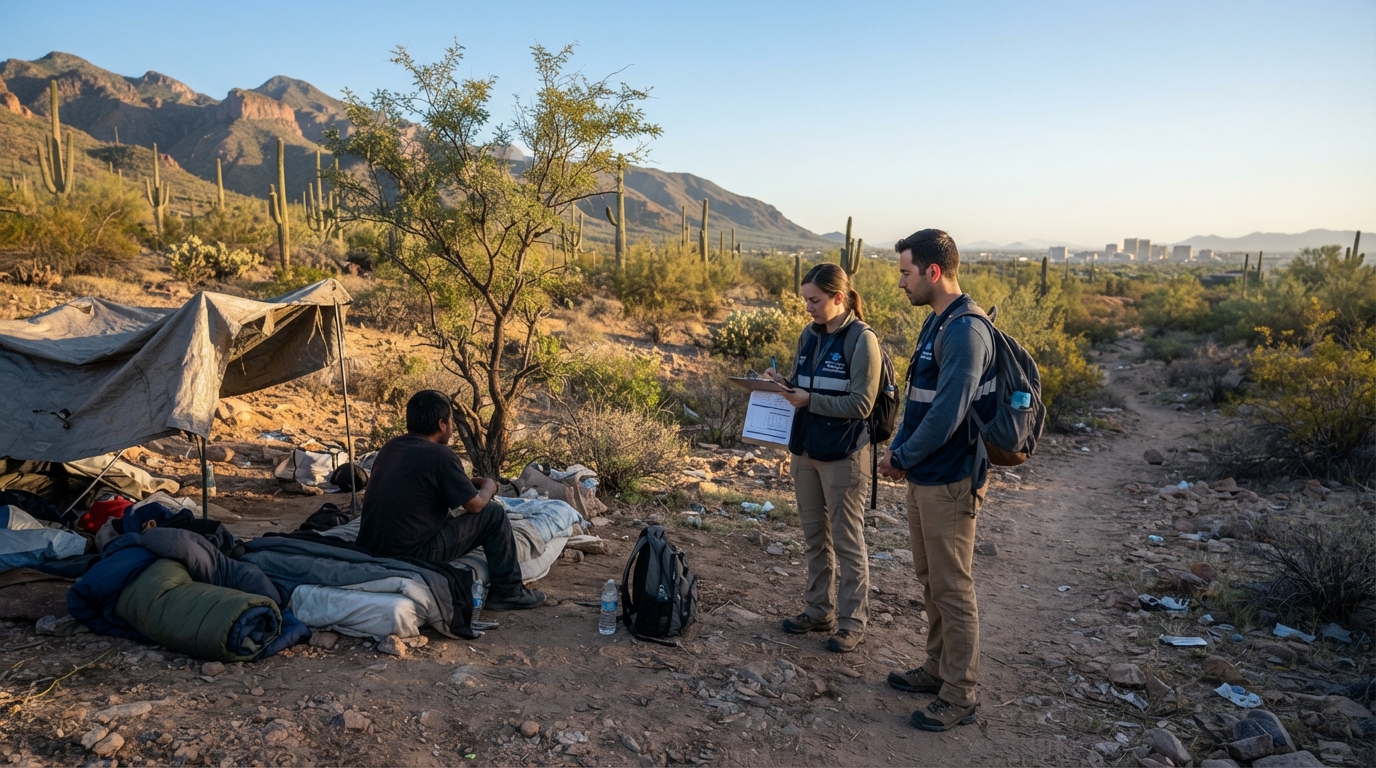
The Point-in-Time count shapes funding and policy, but its narrow methodology means the final number should be read as a minimum rather than a complete census.
Archive note: This report was prepared for Tucson Ahead’s 2026 launch archive using contemporaneous public records and reporting. The date reflects the underlying news event.
What happened
Volunteers and service providers spread across Pima County for the federally required Point-in-Time count of people living in shelters or without shelter. The count gives local governments and nonprofit organizations a common annual benchmark and contributes to decisions about federal homelessness funding. Organizers sought hundreds of volunteers to cover Tucson and surrounding communities.

Why it matters in Tucson
A one-night count cannot capture everyone sleeping in vehicles, temporarily staying with friends or moving between unstable situations. Weather, volunteer coverage and whether people can be located all affect the total. That limitation matters when elected officials use the number to describe the scale of need: a decline can reflect genuine progress, but it can also reflect differences in counting conditions.
What to watch next
The final report should be compared with shelter use, eviction filings, school-district homelessness data and the number of people seeking housing assistance. Readers should also look for geographic detail showing where unsheltered residents were found and whether new shelter or housing programs are reaching the areas of greatest need.
Source and verification: View the underlying report or public record. Tucson Ahead independently rewrote and contextualized this article; no source article text or publisher-owned photography was republished.