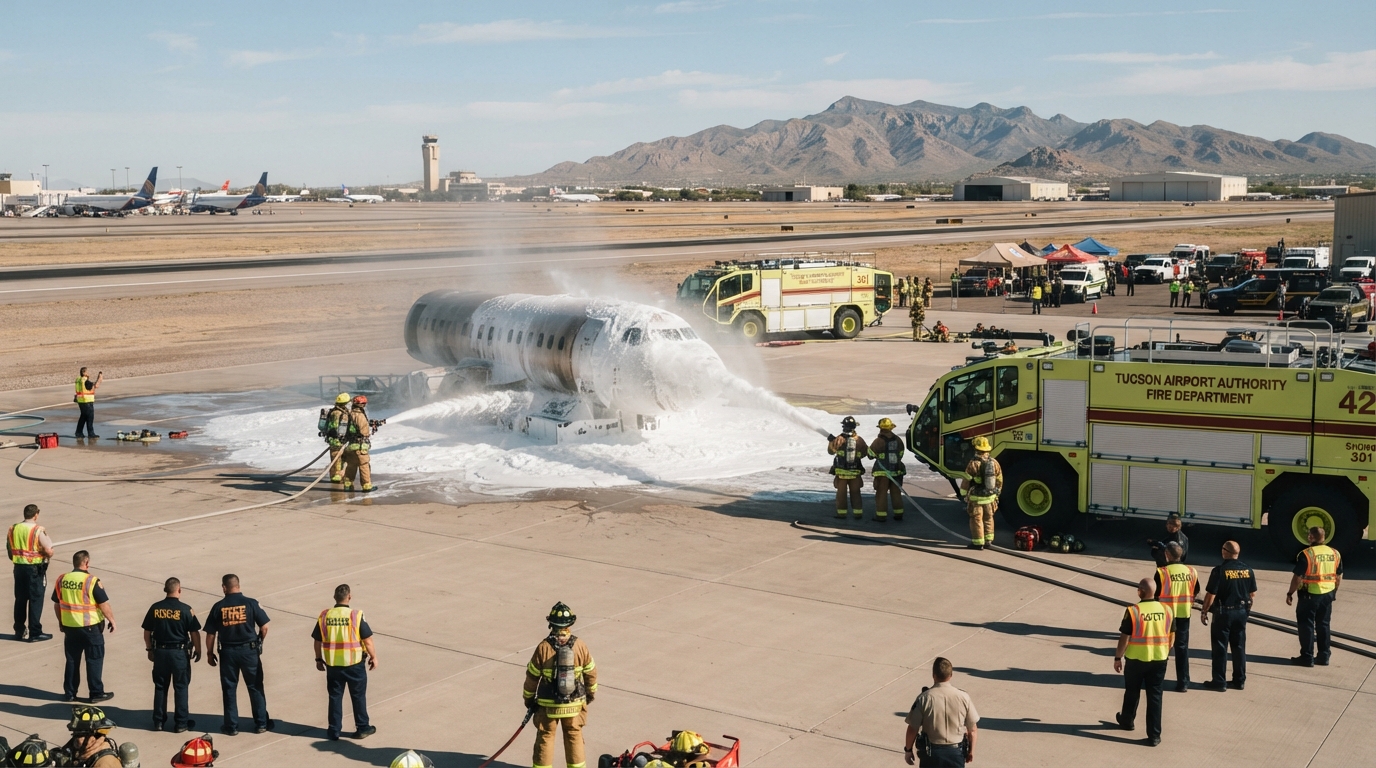
The full-scale exercise brought multiple agencies together while new firefighting equipment highlighted a quieter environmental transition.
Archive note: This report was prepared for Tucson Ahead’s 2026 launch archive using contemporaneous public records and reporting. The date reflects the underlying news event.
What happened
Tucson International Airport conducted a full-scale emergency exercise designed to test the response to a major aviation incident. Airports periodically stage these drills to evaluate command, communications, rescue, medical response and coordination among airport staff and outside agencies. Tucson’s exercise also coincided with attention to newer firefighting vehicles and the aviation industry’s transition away from foam containing PFAS chemicals.
Why it matters in Tucson
An airport emergency quickly crosses jurisdictional lines, making communication failures as consequential as equipment failures. PFAS adds a second public-interest dimension: firefighting foams have been effective against fuel fires but are associated with persistent environmental contamination. Replacing them requires compatible equipment, training and disposal practices.
What to watch next
The meaningful follow-up is the after-action process. Airport officials should identify lessons without exposing sensitive security details, assign corrective actions and report whether equipment, staffing or mutual-aid procedures changed. The airport’s PFAS transition should also include transparent handling of legacy foam and contaminated material.
Source and verification: View the underlying report or public record. Tucson Ahead independently rewrote and contextualized this article; no source article text or publisher-owned photography was republished.